


Home Garden Fit
Use the plant in a home-garden setting that provides its listed growing conditions.Suited to its listed garden settings.
products.product.pickup_availability.unavailable
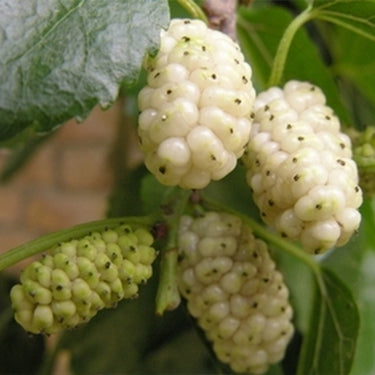
For backyard orchards, sow Mulberry (Morus spp.) in a setting that offers full sun. This perennial garden crop grows best with fertile, well-drained soil.
Use the recommended germination range to guide the first sowing. Water moderately and prevent the soil from becoming waterlogged until seedlings are established, then harvest when the crop reaches the appropriate stage for eating.
Use the plant in a home-garden setting that provides its listed growing conditions.Suited to its listed garden settings.
Harvest the edible crop at the appropriate stage for fresh use.Harvest at the proper stage for fresh use.
Add crop-appropriate foliage or flower texture to a seasonal planting.Adds seasonal garden texture.
Prepare a site or container with the listed light and soil conditions.
Prepare the listed light and soil conditions.
Sow at 70-85 F using crop-appropriate depth and light guidance.
Sow at 70-85 F.
Keep the seedbed at the listed moisture level without waterlogging it.
Maintain the listed moisture level.
Continue crop-appropriate care as the young plants establish.
Maintain suitable care as plants establish.
Harvest the edible portion only when it reaches the crop's appropriate ready stage.
Harvest when the crop is ready.
Continue exploring products you've recently viewed.